
The Renewable Energy Directive and the development of clean energy in the EU: where are we now?
The transformation of waste into energy ( Waste to Energy ) It is clear that the fight against climate change also involves the correct selection, management, and disposal of waste. In this regard,…

The transformation of waste into energy ( Waste to Energy )
It is clear that the fight against climate change also involves the correct selection, management, and disposal of waste.
In this regard, the most recent estimates highlight how waste management is considered responsible for approximately 5% of global climate-altering gas emissions , equivalent to the emissions emitted by all commercial flights in the world or 65% of the CO2 produced, on an annual basis, by all cars in the world.
In its communication of 11 March 2020, “ A new Circular Economy Action Plan for a cleaner and more competitive Europe ,“ the European Commission starts from an extremely alarming fact: despite efforts made at national and EU level, the amount of waste produced is not decreasing; every year, economic activities in the EU generate a total of 2.5 billion tonnes of waste, equivalent to 5 tonnes per capita , while in the same period each citizen produces almost half a tonne of municipal waste . At the same time, the disposal of municipal solid waste continues to be a highly critical issue, as landfills and incinerators, which have a significant environmental impact, are still widely used as standard disposal methods.
As part of the 2018 Circular Economy Package , the European legislator – with Directive 2018/851/EU of 30 May 2018 ( Waste Framework Directive ) – introduces, among other things, new targets for the recycling of municipal waste , establishing that, by 2025 , at least 55% of municipal waste by weight must be recycled, which will rise to 60% by 2030 and 65% by 2035. Furthermore, according to the new Waste Framework Directive, Member States should have established,by January 1, 2025, the separate collection of textile materials and hazardous waste produced by households, as well as ensuring that, by 31 December 2023 , organic waste was collected separately or recycled at source (for example, by composting ).
On July 25, 2024, the European Commission initiated infringement proceedings against Italy for failing to properly transpose Directive 2018/851/EU with regard to extended producer responsibility , ensuring high-quality recycling , the separate collection of hazardous waste , and the implementation of an electronic traceability system. Furthermore, the Commission also charged Italy (and all other Member States) with failure to achieve waste recycling targets (the 2020 target of 50% preparation for reuse and recycling of municipal waste and the 65% recycling target for electronic waste).
The Renewable Energy Directive ( RED III ) and the development of clean energy in the EU
According to official data published by Eurostat , in 2023 , 24.5% of gross final energy consumption at EU level was produced from renewable energy sources , an increase of 1.4 percentage points compared to the previous year. However, the percentage share recorded in 2023 is 18 percentage points lower than the 2030 target ( 42.5% ), which would require an average annual increase of around 2.6 percentage points from the current year to 2030 .
As reported on the official Eurostat website, the best performing member countries are Finland, Denmark and Sweden , which in 2023 produced 66.4%, 50.8% and 44.9% of their gross final energy consumption from renewable sources, respectively. Finland and Denmark produced most of their renewable energy through solid biofuels, wind power and hydroelectricity , while Denmark’s renewable energy production was mainly based on solid biofuels and wind power . The least flattering results were achieved by Luxembourg ( 11.6% ), Belgium ( 14.7% ) and Malta ( 15.1% ). Italy’s share is just under 20% , while the European average stands at 24.5% . The European Union’s energy system’s transition from non-renewable to renewable energy aims to: secure energy supplies, limiting the EU’s energy dependence on third countries; reduce greenhouse gas emissions; lower energy costs; and foster industrial development, growth, and employment.
To this end, the European legislator adopted the new Directive 2023/2413/EU of 18 October 2023 on renewable energy ( Renewable Energy Directive – RED III ), which amended Directive 2018/2001/EU ( Renewable Energy Directive – RED II ), raising the binding target for renewable energy in the EU for 2030 to a minimum of 42.5% with the hope of reaching 45%. The energy implications are significant, as with RED III, the European legislator intends to almost double the current share of energy from renewable sources at EU level.
Recent studies have shown, however, that—based on the annual increase in renewable energy over the last 20 years, equal to approximately 0.71% —achieving the target set by RED III appears unrealistic . These studies estimate that the renewable energy forecast in the EU, based on the aforementioned growth trend, will reach 28.5% in 2030 .
Although the European Commission, with Recommendation 2024/1343/EU of 13 May 2024 , had urged Member States to transpose the amendments introduced by RED III, highlighting the importance and urgency of accelerating the authorization procedures for energy from renewable sources and related infrastructure projects , the Commission itself, last September , initiated infringement proceedings against all Member States (with the exception of Denmark, which transposed the amendments within the established timeframe), as they had not yet fully implemented the provisions introduced by RED III, relating to the simplification and acceleration of authorization procedures. In Italy, on 8 October last , Parliament began examining the draft „European Delegation Law 2024“ , which will give the green light to the transposition of RED III into our legal system.
Regarding energy production from renewable sources, in order to progressively reduce energy supplies from third countries and thus make the European Union energy self-sufficient, in May 2022 the Commission launched the REPowerEU plan to save energy, diversify energy supplies, and produce clean energy. With RED III, it raised the binding target for renewable energy to a minimum of 42.5% by 2030 (with the hope of reaching 45%). To achieve the goal of replacing fossil fuels and accelerating Europe’s clean energy transition, the REPowerEU plan aims, among other things, to increase biogas production for conversion into sustainable biomethane to 35 billion m3 by 2030, with estimated investments of approximately €37 billion.
Biomethane production from waste ( Waste to Methane )
The production of biomethane through the anaerobic digestion of the organic fraction of municipal solid waste ( ORMSW ) – the sum of the quantities of biodegradable waste from urban and industrial waste (the so-called “ wet „) and prunings from public and private green areas (the so-called “ green „) – is considered one of the most effective and eco-sustainable processes for the recycling of organic waste , as it produces biogas, which can be converted into biomethane, and a liquid flow called digestate , which can be used in the agricultural sector or converted into value-added products .
In Italy, there are several state-of-the-art anaerobic digestion plants capable of treating several thousand tons of MSW per year. The operations carried out within the anaerobic digestion plant are divided into: pre-treatment, anaerobic digestion process, digestate composting, purification, and biogas upgrading.
From biogas production to conversion into biomethane.
The upgrading phase consists of the treatment and purification of the biogas, which is transformed into pure biomethane , according to national regulations, and subsequently pumped through a special controlled cabin where the quality is verified and the productivity rate is measured, before being injected into the SNAM natural gas distribution network, according to the strict technical characteristics required by Italian legislation.
The production of biocompost as a biofertilizer for agriculture.
Digestate is the further result – in addition to biomethane – of anaerobic digestion, which, after having undergone an intensive treatment cycle aimed at eliminating all pathogenic microorganisms and any weed seeds that would affect the crops, is used in agriculture as a biofertilizer and soil improver .
Anaerobic digestion plants in the circular economy.
FORSU anaerobic digestion plants have high potential in terms of eco-sustainability and circularity because:
- reduce greenhouse gas emissions ;
- reduce soil and water pollution caused by waste burning;
- avoid the generation of leachate and odors from landfills;
- contribute significantly to energy security , particularly in regions with limited access to non-renewable energy sources;
- contribute to the decentralized and small-scale generation of biogas ;
- they reduce the amount of waste , contribute to mitigating the effects of climate change and provide a source of renewable energy;
- generate revenue from the sale of digestate and biogas, contributing to the economic sustainability of the plant.
However, several challenges need to be addressed to optimize the anaerobic digestion process, such as:
- The availability of suitable OFMSW for the anaerobic digestion process may be limited , and the quality of the substrate may vary significantly, impacting process efficiency and biogas yield. Specifically, the substrate must be easily digestible, have an adequate carbon-to-nitrogen ratio, and be free of plastic residues, contaminants, antibiotics, and heavy metals. Therefore, proper substrate selection and pretreatment are essential to optimize process efficiency and biogas yield;
- The quality of the digestate produced following the anaerobic digestion of OFMSW can contain an excellent amount of nutrients, making it a good fertilizer, but it may also include plastic residues, heavy metals, and organic contaminants , which pose a risk to human health and the environment if not managed properly. Furthermore, the digestate requires adequate infrastructure for effective disposal, due to its higher organic content and nutritional composition;
- The need to ensure constant monitoring of key parameters (substrate type, temperature, pH, hydraulic retention time, organic loading rate), as well as adequate maintenance, to ensure optimal performance, improving biogas yield and methane content and avoiding malfunctions (e.g., biomethane leakage into the atmosphere) or, worse, process failure. In this regard, adequate training and technical support for plant management and maintenance personnel are essential for the proper functioning of the process.
The importance of the circular bioeconomy and bio-based innovations.
The production of biomethane from waste demonstrates how bio-based innovations can be leveraged for waste valorization, resource recovery, and environmental sustainability , in line with the principles of the circular bioeconomy . At the heart of this paradigm shift are bio-based innovations, technological advances derived from biological processes and renewable resources that replace conventional materials and promote sustainability. Bio-based innovations are at the heart of the circular bioeconomy, which contributes significantly to reducing environmental impact, improving resource efficiency, developing innovative technologies, and stimulating economic growth.
Bio-based innovations are essential drivers in the transition to a circular economy , as they trigger a virtuous cycle in which innovation and technology contribute to economic progress, leading to the destruction and obsolescence of technologies and business models that belong to the linear economy of the past. From a biochemical perspective, these innovations enable efficient waste recycling, resource recovery, and the conversion of organic materials into valuable products such as biofuels, bioplastics, and biofertilizers.
To fully harness the potential of bio-based innovations in the circular economy, a multi-stakeholder approach is essential : on the one hand, policymakers must implement supportive regulatory frameworks and financial incentives to encourage investment in the specific sector; on the other, companies must adopt sustainable practices and integrate bio-based solutions into their value chains; finally, researchers must continue to develop advanced technologies that address current challenges, such as high initial costs, scalability, and process efficiency; and finally, raising market awareness about the benefits of bio-based products is necessary to stimulate consumer demand and support market growth.
_______
*Marco Letizi, PhD, International Consultant to the United Nations, European Commission and Council of Europe, Author


Where are we now in the fight against greenwashing, between methodological standards and unfair commercial practices?
Does carbon offsetting really encourage eco-sustainable behavior in B2B organizations or, conversely, does it incentivize the organizations that use it to engage…

Carbonwashing and the risk of tax fraud in the European market
The intangible nature of the assets, large amounts of capital, incomplete legislation and the lack of technical and professional preparation of the…
Climate: towards the new 2040 target — what changes after the vote in the European Parliament? What obligations for businesses?
The amendment proposal outlines an update with an intermediate target for 2040: a 90% reduction in net emissions compared to 1990 levels.…
Carbon offsetting: the ban introduced by the Green Claims Directive and the risk of greenwashing
Does carbon offsetting really encourage eco-sustainable behavior in B2B organizations or, conversely, does it incentivize the organizations that use it to engage…

Last week in Luanda (Angola) – workshop on “Strenghtening Angolan Tax Administration’s (AGT) capacity to combat tax evasion and illicit financial flows (IFFs)”
Last week in Luanda (Angola), I conducted a UNODC workshop on “Strenghtening Angolan Tax Administration’s (AGT) capacity to combat tax evasion and…
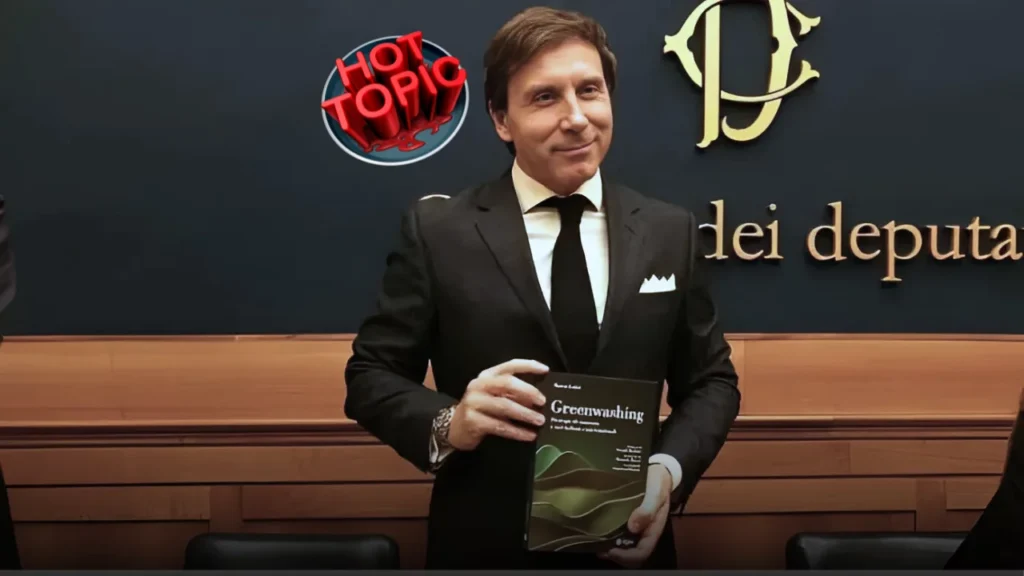
Greenwashing: between misleading marketing and the fight for true sustainability. Marco Letizi’s book presented at Bocconi University
At the CSR and Social Innovation Fair, author Marco Letizi presented his essay "Greenwashing: Countermeasures, Italian and International Case Studies," a work…
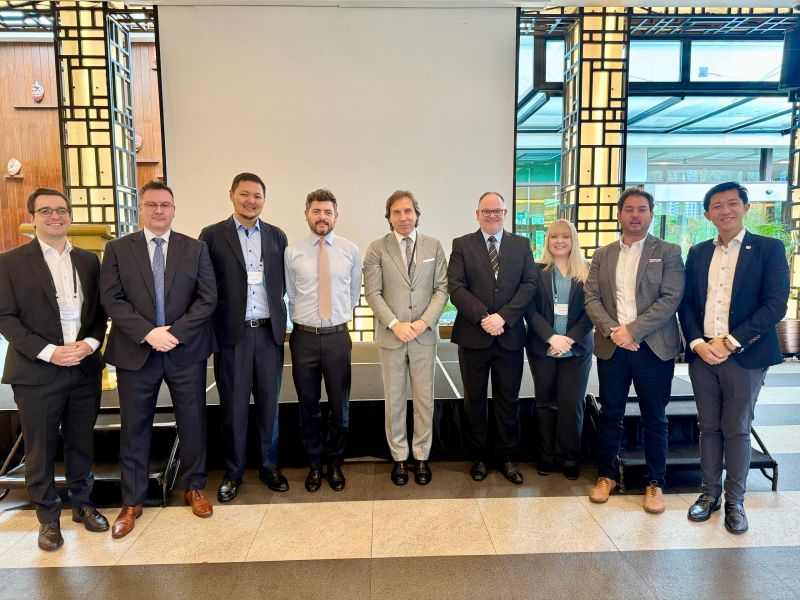
In Jakarta with the Asian Development Bank: a five-day regional workshop on TBML
Last week, in Jakarta, I had the opportunity to speak as an expert in a five-day regional workshop on TBML, jointly organised…