
Climate: towards the new 2040 target — what changes after the vote in the European Parliament? What obligations for businesses?
The amendment proposal outlines an update with an intermediate target for 2040: a 90% reduction in net emissions compared to 1990 levels. For businesses, a more integrated, more…
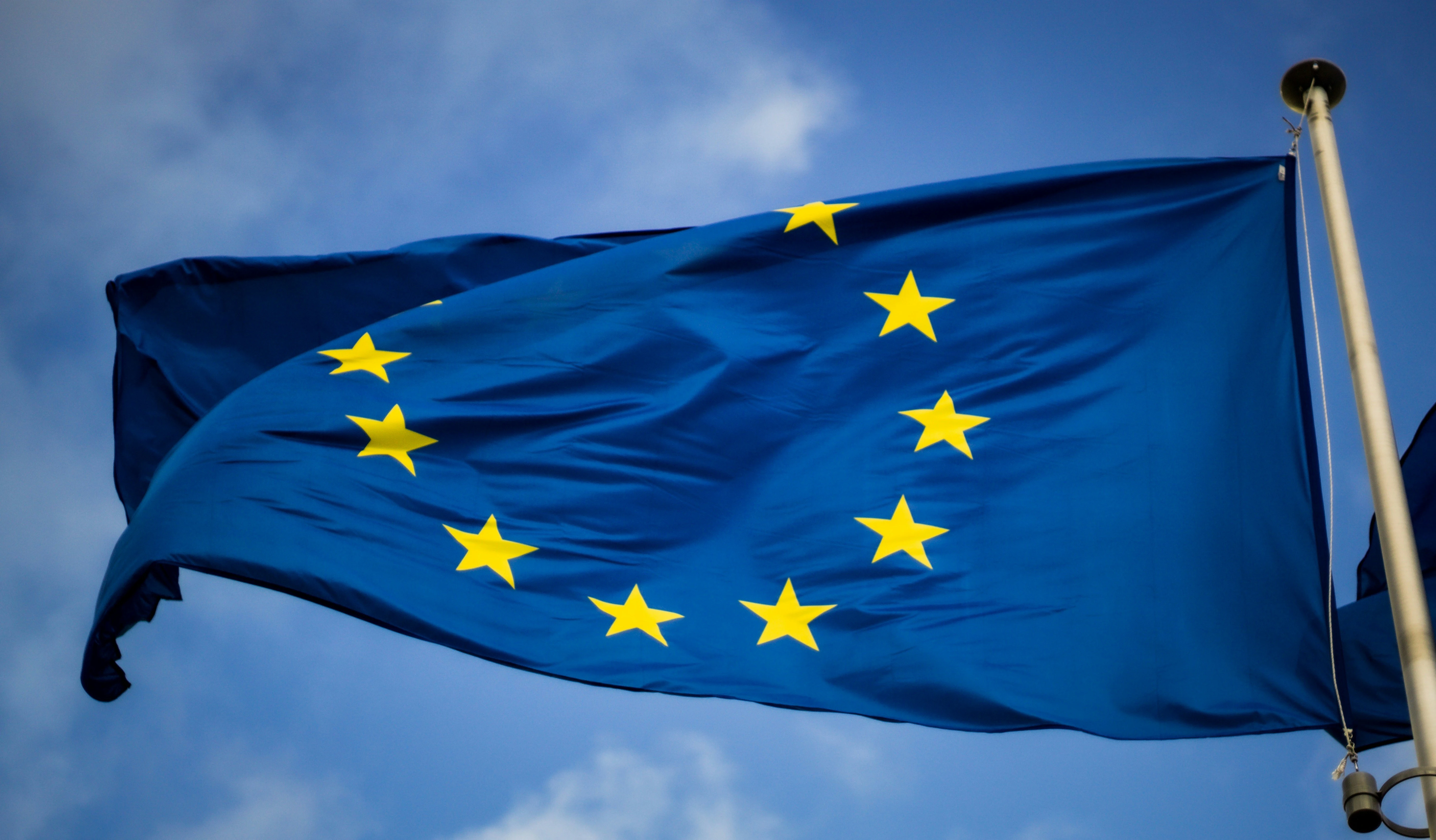
The amendment proposal outlines an update with an intermediate target for 2040: a 90% reduction in net emissions compared to 1990 levels. For businesses, a more integrated, more flexible but also more stringent regulatory framework is emerging.
On 13 November, the European Parliament adopted its position at first reading on the proposal to amend Regulation (EU) 2021/1119 (the European Climate Law), outlining an update to the Union’s climate governance framework and introducing an intermediate target for 2040: a 90% reduction in net emissions compared to 1990 levels. This step paves the way for the start of trilogue negotiations with the Council and the Commission, which will be necessary to define the final text.
The stakes are high: the new target will directly affect industrial, energy and fiscal policies for the next fifteen years, with significant implications for European businesses.
A more ambitious target and a more flexible framework
The Commission’s proposal last February — a 90% reduction in net emissions by 2040 — has been confirmed by the European Parliament, which has nevertheless introduced significant amendments in response to Member States’ requests for greater flexibility.
The main amendments concern:
• Flexibility between sectors and instruments.
The Parliament proposes that progress achieved by a Member State in one sector may offset shortcomings in others, provided that each sector contributes adequately. This innovation is intended to allow more efficient cost management and greater adaptability to national specificities.
• Natural and technological removals.
Surpluses in natural carbon removals may offset residual emissions, while permanent removals — such as Bioenergy with Carbon Capture and Storage (BioCCS) and Direct Air Carbon Capture and Storage (DACCS) — will be treated separately and used to neutralize emissions that are difficult to abate.
• Potential use of international credits.
The European Parliament has opened the possibility, to be defined by the Council, of using high-quality international credits in the final phase of the 2031–2040 decade. This is a sensitive issue: such credits cannot be used for compliance within the EU ETS system, but they may support the overall efforts of Member States.
In other words, the European legislator intends that emissions reductions take place within EU territory, avoiding excessive dependence on extra-EU offsetting mechanisms.
This approach, already contained in the current Regulation (EU) 2021/1119, has been reaffirmed in the most recent amendments proposed by the European Commission (2024) and the European Parliament (13 November 2025). The European Climate Law establishes that from 2029 onwards, Member States will no longer be able to use CO₂ allowances or reductions recognized through foreign climate certificates to meet their climate targets.
The rationale is to ensure that decarbonization efforts genuinely take place within the Union, guaranteeing environmental integrity and reducing the risk of non-transparent or non-additional interventions in third countries.
However, during the transitional phase, the regulation allows limited flexibility: until 2036, Member States may rely on foreign offsetting mechanisms, but only up to a maximum ceiling of 5% of emissions. This is a bridging clause designed to accompany the adjustment of national systems and businesses to a framework increasingly based on real and verifiable emission reductions within Europe.
In the final phase (from 2036), the ban on using foreign certificates to achieve reduction targets will fully apply, favouring a strategy focused on domestic reductions and on certified natural and technological removals within the EU.
• A central role for energy and industry.
In the amendments approved by the European Parliament on 13 November 2025, greater emphasis is given to the conclusions of the European Council of 23 October 2025, which call for acceleration in energy security, affordable prices, electricity interconnections and the development of a genuine EU Energy Union.
Significant attention is also given to the Clean Industrial Deal, with references to permitting simplification, strengthening competitiveness, protecting SMEs and introducing mechanisms to prevent carbon leakage.
• A biennial assessment and a strengthened review clause.
To ensure continuous monitoring of the trajectory towards 2040, the amended proposal introduces two new mechanisms:
- a biennial assessment by the Commission on Member States’ progress towards intermediate milestones;
- a strengthened revision of Regulation (EU) 2021/1119, which may lead to further legislative proposals if significant deviations are detected in natural removals or emissions progress.
Regulatory framework for emission reductions
What changes for European businesses
Raising the 2040 target and the evolution of the regulatory framework will lead to a new regulatory phase with direct implications for businesses in several areas:
• Increasing pressure on industrial decarbonization.
The European Parliament reiterates the need to maintain strong incentives to reduce emissions in energy-intensive and material-intensive sectors, with an expected strengthening of the EU ETS system after 2039 to include a limited share of permanent removals.
• Greater importance of carbon capture and storage technologies.
BioCCS and DACCS will become structural components of the 2040 strategy. Energy-intensive industries and those with hard-to-abate process emissions may be among the first required to adopt them, also for compliance reasons.
• Impact on energy costs and competitiveness.
The amendments require the Commission and Member States to constantly assess the effects on energy prices, global competitiveness and supply-chain resilience. In practice, businesses can expect new support instruments — from strengthened state aid schemes to the Industrial Decarbonisation Bank — but also new obligations.
• Strengthening of the Energy Efficiency First principle.
Companies will be required to demonstrate concrete progress in energy efficiency, consumption management and the electrification of industrial processes.
• Greater attention to SMEs, agriculture and vulnerable value chains.
The European Parliament introduces explicit references to the needs of small and medium-sized enterprises and the most exposed sectors. This could translate into dedicated programmes, but also into new reporting requirements and emission-management obligations across supply chains.
• Prospect of an expansion of the CBAM.
The amendments refer to extending the Carbon Border Adjustment Mechanism to downstream products. This would broaden the range of sectors involved and increase the need to monitor embedded emissions in global value chains.
Towards the final negotiations
The approval by the European Parliament does not conclude the legislative process. The trilogue negotiations will need to reconcile climate ambition, energy security and industrial competitiveness — three parameters that Member States have placed on an equal footing.
The final outcome will define the Union’s industrial trajectory until 2050. In the meantime, businesses are called upon to prepare for a more integrated, more flexible but also more stringent regulatory framework, in which the ability to invest in clean technologies, energy efficiency and carbon management will no longer be merely a strategic variable, but an operational requirement.
Marco Letizi, PhD – Lawyer, Chartered Accountant and Statutory Auditor, International Consultant to the United Nations, the European Commission and the Council of Europe, Founder & CEO of ESG Compliance, Author.


Where are we now in the fight against greenwashing, between methodological standards and unfair commercial practices?
Does carbon offsetting really encourage eco-sustainable behavior in B2B organizations or, conversely, does it incentivize the organizations that use it to engage…

The Renewable Energy Directive and the development of clean energy in the EU: where are we now?
The transformation of waste into energy ( Waste to Energy ) It is clear that the fight against climate change also involves the correct selection, management, and…

Carbonwashing and the risk of tax fraud in the European market
The intangible nature of the assets, large amounts of capital, incomplete legislation and the lack of technical and professional preparation of the…
Carbon offsetting: the ban introduced by the Green Claims Directive and the risk of greenwashing
Does carbon offsetting really encourage eco-sustainable behavior in B2B organizations or, conversely, does it incentivize the organizations that use it to engage…

Last week in Luanda (Angola) – workshop on “Strenghtening Angolan Tax Administration’s (AGT) capacity to combat tax evasion and illicit financial flows (IFFs)”
Last week in Luanda (Angola), I conducted a UNODC workshop on “Strenghtening Angolan Tax Administration’s (AGT) capacity to combat tax evasion and…

Greenwashing: between misleading marketing and the fight for true sustainability. Marco Letizi’s book presented at Bocconi University
At the CSR and Social Innovation Fair, author Marco Letizi presented his essay "Greenwashing: Countermeasures, Italian and International Case Studies," a work…

In Jakarta with the Asian Development Bank: a five-day regional workshop on TBML
Last week, in Jakarta, I had the opportunity to speak as an expert in a five-day regional workshop on TBML, jointly organised…