
Greenwashing: Antitrust Authority Gains More Power, But Evidence, Costs, and the Risk of Greenhushing Remain Uncertain
The true effectiveness of the new measures will depend on clear guidelines regarding standards of proof and certification, the distinction between general and specific green claims, coordination between…
The true effectiveness of the new measures will depend on clear guidelines regarding standards of proof and certification, the distinction between general and specific green claims, coordination between authorities, and the proportionality of the burdens placed on SMEs.
With Legislative Decree No. 30 of 20 February 2026, the Italian legislator takes a decisive step forward in regulating green claims. The cornerstone of the reform lies in Article 1 of the Decree, which amends the Consumer Code by introducing new definitions, expanding the scope of relevant information, and typifying new unfair commercial practices in the environmental domain. Article 2 postpones the application of the new rules until 27 September 2026.
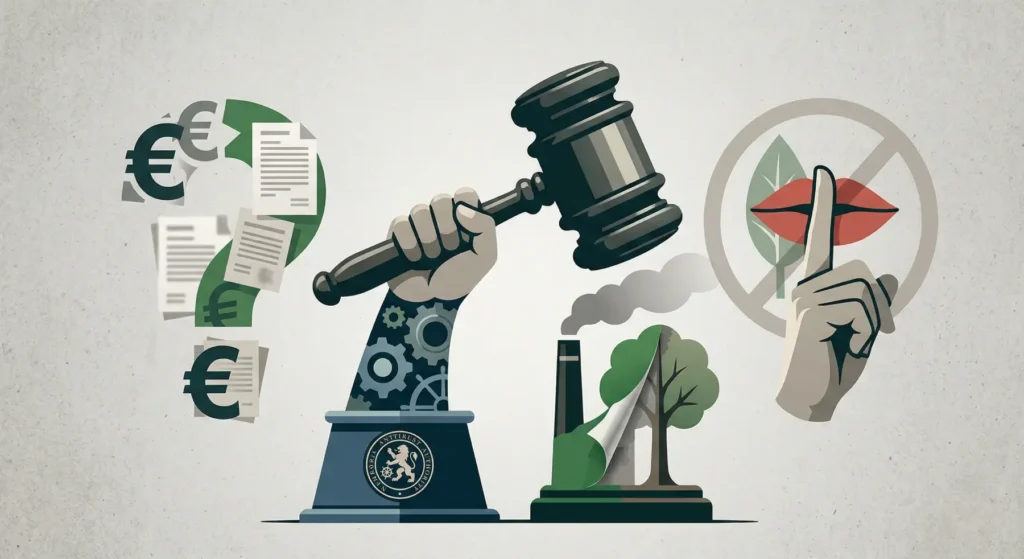
This Decree does not merely tighten provisions against greenwashing; it marks the structural integration of sustainability into consumer protection and competition law. As a consequence, it indirectly strengthens the role of the Italian Competition Authority (AGCM) as a central enforcement body against misleading environmental claims. In particular, the Decree broadens the catalogue of sanctionable conduct within the framework of unfair commercial practices, thereby expanding the enforcement perimeter within which the Authority operates.
The reinforcement of AGCM’s role stems from the explicit inclusion of environmental claims within the discipline of unfair commercial practices. Article 1(1)(b) of the Decree amends Article 21 of the Consumer Code by including environmental and social characteristics, as well as circularity aspects—such as durability, reparability, and recyclability—among the main characteristics of a product.
The same provision establishes, on the one hand, a prohibition on making environmental claims relating to future performance unless they are supported by clear, objective, publicly available, and verifiable commitments, embedded in a realistic implementation plan subject to periodic independent third-party verification. On the other hand, it prohibits presenting as consumer benefits elements that are irrelevant or not derived from the actual characteristics of the product or the undertaking.
In this context, AGCM assumes an even more central role. The assessment no longer concerns only the manifest falsity of a claim but extends to its ex-ante evidentiary structure—namely, the existence of an implementation plan, measurable targets, defined timelines, verifiability, and independent oversight. A green claim thus becomes a statement that must be constructed as a comprehensive compliance dossier.
It is precisely on the evidentiary level that the new framework presents its most critical challenges. While the Decree requires environmental claims to be substantiated by objective and verifiable evidence, it does not sufficiently clarify the minimum evidentiary threshold required. The issue is further compounded by the fact that the Decree extends the concept of environmental claims beyond textual statements to include graphical, visual, and symbolic representations, including those conveyed through trademarks, brand names, company names, or product names.
From an operational standpoint, identifying a case of greenwashing will often require addressing complex questions: Does the claim refer to the entire product or only to a component? Is the environmental comparison scientifically robust? Are the data up to date? Is the certification genuinely independent? Can carbon offsetting alone justify a claim of climate neutrality?
Article 1(1)(d) introduces several key prohibitions: displaying sustainability labels not based on certification schemes or not established by public authorities; making generic environmental claims without demonstrating recognised environmental excellence; presenting as applicable to the entire product or business an attribute that relates only to a specific aspect; and claiming climate neutrality, reduction, or positive environmental impact based solely on emissions offsetting.
In this respect, the typification of unfair environmental practices shifts the main challenges to the enforcement phase. Demonstrating that a certification is insufficient, that evidence of environmental excellence is inadequate, or that a claim exceeds the scope of the underlying data is a highly technical as well as legal exercise. While the Decree provides a relatively detailed definition of certification systems—requiring public accessibility, non-discriminatory access, stakeholder consultation, non-compliance procedures, and objective third-party monitoring—the practical transition from regulatory definition to case-by-case assessment remains complex.
In the absence of clear implementation guidelines, there is a tangible risk of increased discretion on the part of AGCM in evaluating the sufficiency of evidence, the adequacy of certifications, the clarity of claims, the scope of the message, and the perception of the average consumer. This does not undermine the necessity of effective enforcement; however, where legal categories remain open and evidence is technical-scientific in nature, the risk of inconsistent enforcement becomes evident.
Although the Decree amends the Consumer Code, green claims extend far beyond consumer law. They are equally relevant in corporate communication, ESG reporting, sector-specific regulation, accredited certifications, and, in certain cases, environmental supervision. This cross-sectoral nature is reflected in the layered structure of the Decree.
Article 1(1)(c) introduces a new paragraph 5-ter into Article 22 of the Consumer Code. Where a trader offers comparison services and communicates information on environmental or social characteristics or circularity aspects, relevant information must include the comparison methodology, the products and suppliers compared, and the measures adopted to ensure data accuracy and updates. Once again, consumer law extends into areas traditionally governed by technical data regulation.
As a result, the same conduct may be assessed from multiple perspectives: unfair commercial practice, misleading comparative communication, inaccurate ESG reporting, improper use of certifications or labels, or non-compliant product information. The risk of overlapping competencies among authorities is therefore not merely theoretical, particularly given the absence of a comprehensive coordination framework within the Decree.
From a sanctions perspective, the Decree integrates into the existing framework of the Consumer Code but effectively expands the range of sanctionable conduct and, consequently, the overall enforcement pressure. Moreover, the recitals of the Decree refer to Article 32 of Law No. 234/2012, which allows implementing acts of EU law to introduce administrative sanctions and, in more serious cases, ancillary measures and confiscation, based on proportionality and severity criteria.
In practice, an allegation of greenwashing will not be limited to administrative fines imposed by AGCM. It may trigger cease-and-desist orders, corrective disclosure obligations, reputational damage, competitor actions, litigation, and adverse effects on relationships with banks, investors, and business partners. Compliance with green claims is therefore no longer merely a marketing issue but a core element of enterprise risk governance. The Decree does not provide specific relief mechanisms for SMEs. Article 3 introduces a financial neutrality clause, requiring public administrations to implement the provisions using existing resources, without additional public expenditure. Consequently, the burden of compliance falls primarily on economic operators.
For large enterprises, the new framework will necessitate a significant strengthening of internal compliance systems, particularly regarding the validation of environmental claims, documentation audits, data collection processes, and coordination among legal, marketing, sustainability, and procurement functions. Substantiating an environmental claim may require certifications, third-party verification, supply chain traceability, periodic data updates, and specialised advisory support—resulting in increased compliance costs.
Furthermore, uncertainty regarding evidentiary thresholds may lead to an increase in “greenhushing.” If companies perceive that any environmental claim may be challenged as generic, excessive, or insufficiently substantiated, the immediate response may be to refrain from communicating altogether. While the Decree aims to improve the quality of environmental information, its practical effect may paradoxically discourage its dissemination.
This risk is particularly pronounced in a system that prohibits generic claims, requires robust certification, mandates third-party verification for future performance claims, and disallows climate neutrality claims based solely on offsetting. While these safeguards are understandable, their application without clear operational criteria may discourage even the most responsible companies. Finally, alignment with the evolving EU regulatory framework on green claims presents an additional layer of complexity. The forthcoming European regime may introduce more detailed standards on evidence, verification, comparability, and certification, potentially leading to duplication of compliance requirements.
Companies may therefore need to demonstrate the validity of their claims under both national consumer law and future EU-level standards, increasing the risk of overlapping regulatory scrutiny. In conclusion, Legislative Decree No. 30/2026 undoubtedly strengthens the fight against greenwashing. However, its effectiveness will depend less on the number of prohibitions and more on the quality of their implementation. Clear guidelines will be essential—particularly regarding evidentiary thresholds, the role of certifications, the distinction between generic and substantiated claims, coordination among authorities, and proportionality for SMEs. Without such clarity, the enhanced role of AGCM risks translating into increased regulatory uncertainty, higher compliance costs, and a rise in greenhushing.
*Marco Letizi, PhD, Solicitor, Chartered Accountant and Statutory Auditor, International Consultant to the United Nations, the European Commission and the Council of Europe, CEO & Founder of ESG Compliance, Author


Where are we now in the fight against greenwashing, between methodological standards and unfair commercial practices?
Does carbon offsetting really encourage eco-sustainable behavior in B2B organizations or, conversely, does it incentivize the organizations that use it to engage…

The Renewable Energy Directive and the development of clean energy in the EU: where are we now?
The transformation of waste into energy ( Waste to Energy ) It is clear that the fight against climate change also involves the correct selection, management, and…

Carbonwashing and the risk of tax fraud in the European market
The intangible nature of the assets, large amounts of capital, incomplete legislation and the lack of technical and professional preparation of the…
Climate: towards the new 2040 target — what changes after the vote in the European Parliament? What obligations for businesses?
The amendment proposal outlines an update with an intermediate target for 2040: a 90% reduction in net emissions compared to 1990 levels.…

Last week in Luanda (Angola) – workshop on “Strenghtening Angolan Tax Administration’s (AGT) capacity to combat tax evasion and illicit financial flows (IFFs)”
Last week in Luanda (Angola), I conducted a UNODC workshop on “Strenghtening Angolan Tax Administration’s (AGT) capacity to combat tax evasion and…
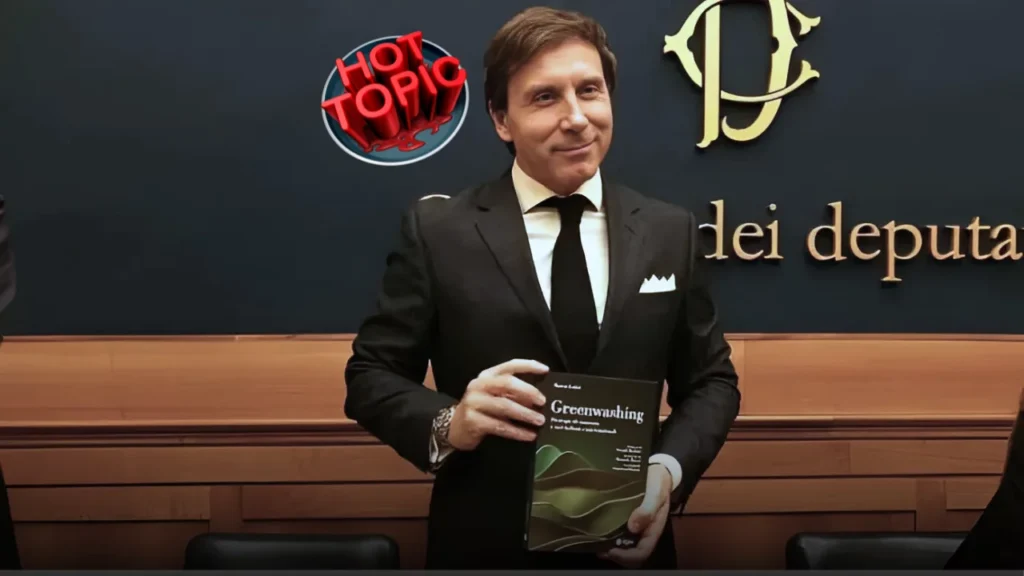
Greenwashing: between misleading marketing and the fight for true sustainability. Marco Letizi’s book presented at Bocconi University
At the CSR and Social Innovation Fair, author Marco Letizi presented his essay "Greenwashing: Countermeasures, Italian and International Case Studies," a work…
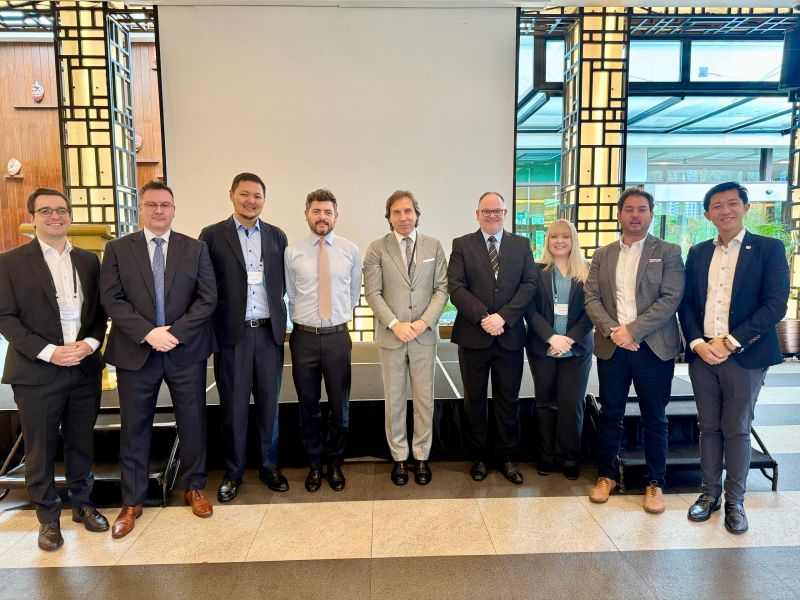
In Jakarta with the Asian Development Bank: a five-day regional workshop on TBML
Last week, in Jakarta, I had the opportunity to speak as an expert in a five-day regional workshop on TBML, jointly organised…