
Carbonwashing and the risk of tax fraud in the European market
The intangible nature of the assets, large amounts of capital, incomplete legislation and the lack of technical and professional preparation of the bodies responsible for control in this…

The intangible nature of the assets, large amounts of capital, incomplete legislation and the lack of technical and professional preparation of the bodies responsible for control in this specific sector have made the carbon market particularly vulnerable to the appetites of organised crime.
limate change is unanimously recognized by both the scientific community and international political institutions as the most significant environmental challenge of the century. Over the years, the Intergovernmental Panel on Climate Change ( IPCC ), established by the World Meteorological Organization ( WMO ) and the United Nations Environment Programme ( UNEP ), has published a series of reports on the impacts of human activities on the climate. Conversely, the risks that climate change poses to businesses are numerous and can impact their profitability and value. Climate change has also encouraged new business opportunities through projects aimed at reducing greenhouse gas ( GHG ) emissions, such as the development of alternative energy sources, reducing dependence on oil, and trading carbon credits in the energy market.
According to the London Stock Exchange Group’s Carbon Market Year in Review , global carbon markets reached a record value of over €880 billion in 2023 , marking a 2% increase compared to 2022. While the overall volume of carbon credits traded remained essentially stable compared to 2022—equivalent to approximately 12.5 billion tonnes of CO₂—the increase in total traded value was mainly driven by rising credit prices in Europe and North America . The world’s largest carbon market, the European Emissions Trading Scheme ( EU ETS ), also reached a record value of approximately €770 billion in 2023, representing 87% of the total value of global carbon markets.
Although emissions trading systems established by regulators are designed to generate economic benefits and protect the environment with the aim of reducing GHGs, these systems also present potential critical issues related to the risk of fraud . Like other financial markets, the carbon market is particularly vulnerable to manipulation by criminal organizations due to the intangible nature of the assets traded, the large amounts of capital invested, a flawed regulatory framework , and the lack of technical and professional training of the bodies responsible for overseeing the specific sector.
Like the mandatory market, the voluntary carbon credit market is also highly exposed to the risk of fraud : carbon offsetting projects offer opportunities for criminal organizations to manipulate data and unduly obtain higher credit allocations by inflating estimates of reduced emissions or fraudulently declaring that the sustainable projects justifying carbon credits reduce emissions more than they actually do. Furthermore, the intangible nature of carbon credits allows ownership rights to the credit to be separated from the sustainable project , meaning a project can be managed by a natural or legal person, while third parties can acquire the rights to market the generated credits.
In general, the carbon market’s overexposure to the risks of criminal activity stems from the fact that it is often difficult to identify the actual beneficiaries of carbon credit rights, and the picture is further complicated by operators‘ lack of knowledge of the actual functioning of this market, which allows less virtuous companies to manipulate carbon emissions data, including through sophisticated greenwashing practices ( false or misleading green claims ).
In this regard, Interpol’s Environmental Crimes Programme has identified five categories of illegal activities in carbon markets:
- fraudulent manipulation of measurements to obtain more carbon credits than those actually due;
- sale of non-existent carbon credits or those belonging to other economic entities;
- false or misleading statements about the environmental or financial benefits of investments in the carbon market;
- exploiting weaknesses in regulatory systems to commit financial crimes, such as money laundering and tax fraud;
- cybercrimes (hacking and phishing) to steal carbon credits and personal data.
Inadequate legal regulation , combined with the lack of a tangible asset behind the traded carbon credits, makes this market particularly vulnerable to VAT fraud, money laundering, and financial fraud . Furthermore, national registries —established to track all carbon credits under the Kyoto Protocol mechanisms—have been found to be lacking in cybersecurity and have been exploited by criminal organizations to illicitly acquire carbon credits and carry out cybercrimes , particularly hacking, phishing , and the distribution of malware and ransomware .
In recent years, the EU market has been affected by a series of significant VAT frauds related to carbonwashing : police forces and prosecutors‘ offices in various European countries have conducted numerous investigations which have uncovered a series of frauds related to the carbon credit market.
In one case, two companies (the transferor and the transferee) were identified, with registered offices in different Member States but belonging to the same criminal organization. After the transferee company fulfilled its VAT obligations, the transferor company declared bankruptcy, thus avoiding paying the tax. Conversely, the transferee company could request a VAT refund from the national tax authority and subsequently resell the credits to foreign purchasing companies.
In another case, six companies operating in Germany were investigated for evading over €200 million in VAT in the European carbon market by exploiting a German tax law that allowed them to import carbon credits tax-free; these were then sold in another Member State by adding VAT to the transfer price and retaining the difference.
A further case of fraud occurred in the United Kingdom , where three individuals were convicted of carbon trading carousel fraud and sentenced to a total of 35 years in prison. The three carbon traders defrauded the VAT system by creating shell companies that imported carbon credits into the United Kingdom and were then systematically closed down immediately after the credits were sold . The credits were then resold to other buffer companies belonging to the same criminal organization to make the trade chain appear legitimate, and finally to further companies, charging VAT that was never paid to the State . This criminal activity, which continued for several months, generated criminal proceeds of approximately €276 million (of which €41 million was fraudulent VAT). The stolen VAT was then transferred to UAE bank accounts, and the money was subsequently distributed to further bank accounts held by members of the criminal organization.
Several cases of VAT fraud related to carbonwashing have also occurred in Italy . Following suspicious financial transactions involving the trafficking of emissions certificates , instruments used to incentivize the reduction of greenhouse gas emissions, the Milan Finance Police (Guardia di Finanza) has conducted an investigation into a criminal conspiracy aimed at committing tax crimes in several European countries.
The criminal organization had issued invoices for non-existent transactions totaling nearly two billion euros, aimed at VAT evasion. The tax fraud, estimated at approximately 500 million euros, was perpetrated through VAT evasion on the purchase and sale of CO2 emission certificates. More specifically, the criminal organization systematically implemented so-called carousel fraud , a fraudulent scheme through which emission certificates were purchased from foreign companies operating under a VAT exemption regime , involving shell companies and buffer companies , with the aim of misappropriating the tax paid by the final buyers. According to investigators, the criminal activity caused significant financial damage in the form of unpaid VAT , as well as detrimental effects in terms of market distortion , unfair competition , and, ultimately, violation of the principle of free competition .
Based on a recent article in Il Sole 24 Ore , the Taranto Public Prosecutor’s Office has reportedly issued ten notices of investigation against the same number of executives of Acciaierie d’Italia, formerly Ilva (the company that operated prior to the current extraordinary administration led by commissioners from the Ministry of Enterprise and Made in Italy), alleging fraud against the state . Specifically, the suspects are accused of having declared to the ETS Committee a false CO2 emissions monitoring and reporting plan , thus manipulating CO2 emissions data in order to obtain a higher number of carbon credits than it was actually entitled to. As a result of this alleged manipulation, the plant would have unduly benefited from a higher free allocation of emission allowances for 2023.
In another case, the Milan Financial Police (Guardia di Finanza) conducted investigations into a transnational criminal conspiracy linked to a single Franco-Israeli leader, committed tax fraud (the alleged amount of fraud is approximately €650 million) through the illicit online trade of carbon trading certificates. Investigators charged the suspects with issuing and using subjectively and objectively nonexistent invoices amounting to €3.5 billion. As stated in the preliminary investigations judge’s order, the investigations focused on the online trading of CO2 emission certificates , characterized by the presence of trading platforms in all member states. Traders can access these platforms simply by registering in special registries and providing a correspondent account to record purchases and sales. Essentially, any economic entity registered with a Chamber of Commerce and with a digital account registered with the various carbon credit registries is able to operate on European CO2 credit trading platforms, even for large volumes of allowances and funds.
It is therefore clear how incomplete EU legislation and an ineffective control system have encouraged the emergence of tax fraud in the carbon trading sector , making the carbon credit market particularly vulnerable to the appetites of organised crime which, through shell companies with minimal capital and managed by foreign entities, are able to buy and sell carbon quotas without any particular requirements throughout the EU , moving significant financial flows and laundering huge amounts of capital of dubious or illicit origin.

Where are we now in the fight against greenwashing, between methodological standards and unfair commercial practices?
Does carbon offsetting really encourage eco-sustainable behavior in B2B organizations or, conversely, does it incentivize the organizations that use it to engage…

The Renewable Energy Directive and the development of clean energy in the EU: where are we now?
The transformation of waste into energy ( Waste to Energy ) It is clear that the fight against climate change also involves the correct selection, management, and…
Climate: towards the new 2040 target — what changes after the vote in the European Parliament? What obligations for businesses?
The amendment proposal outlines an update with an intermediate target for 2040: a 90% reduction in net emissions compared to 1990 levels.…
Carbon offsetting: the ban introduced by the Green Claims Directive and the risk of greenwashing
Does carbon offsetting really encourage eco-sustainable behavior in B2B organizations or, conversely, does it incentivize the organizations that use it to engage…
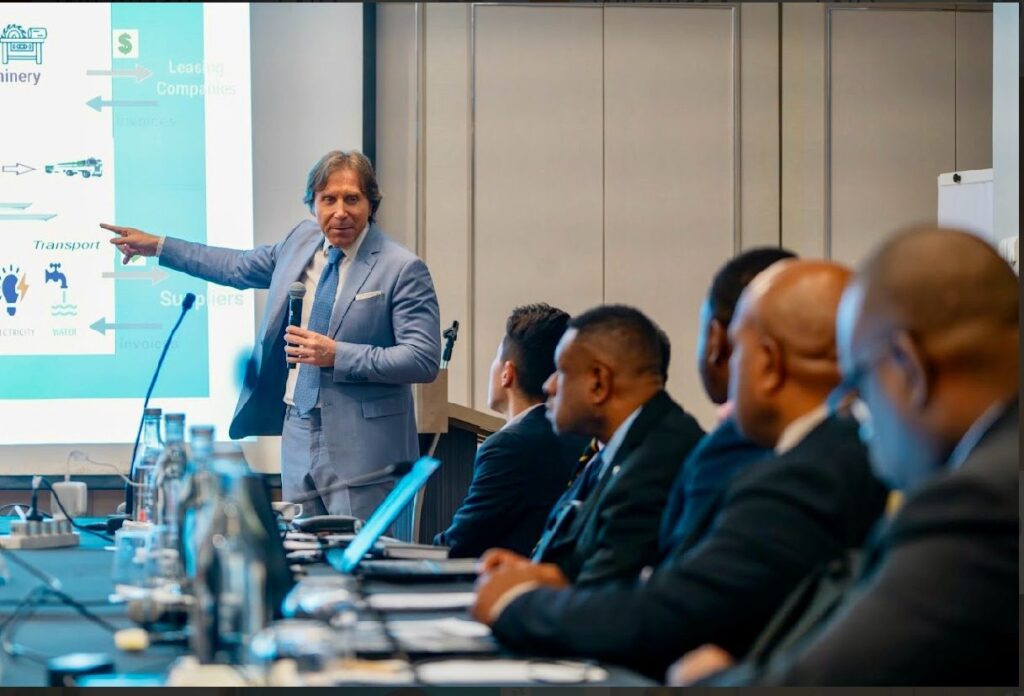
Last week in Luanda (Angola) – workshop on “Strenghtening Angolan Tax Administration’s (AGT) capacity to combat tax evasion and illicit financial flows (IFFs)”
Last week in Luanda (Angola), I conducted a UNODC workshop on “Strenghtening Angolan Tax Administration’s (AGT) capacity to combat tax evasion and…
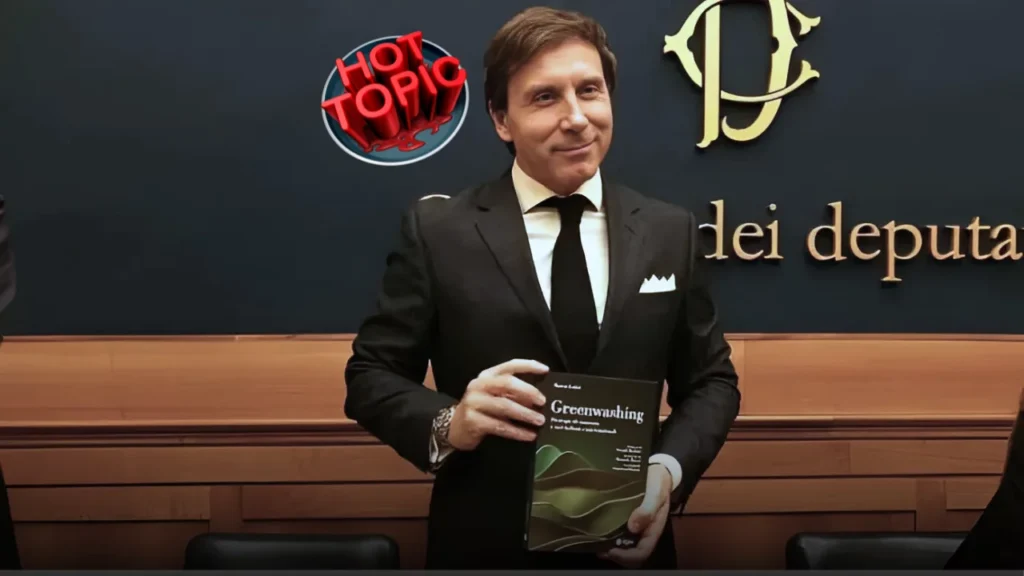
Greenwashing: between misleading marketing and the fight for true sustainability. Marco Letizi’s book presented at Bocconi University
At the CSR and Social Innovation Fair, author Marco Letizi presented his essay "Greenwashing: Countermeasures, Italian and International Case Studies," a work…
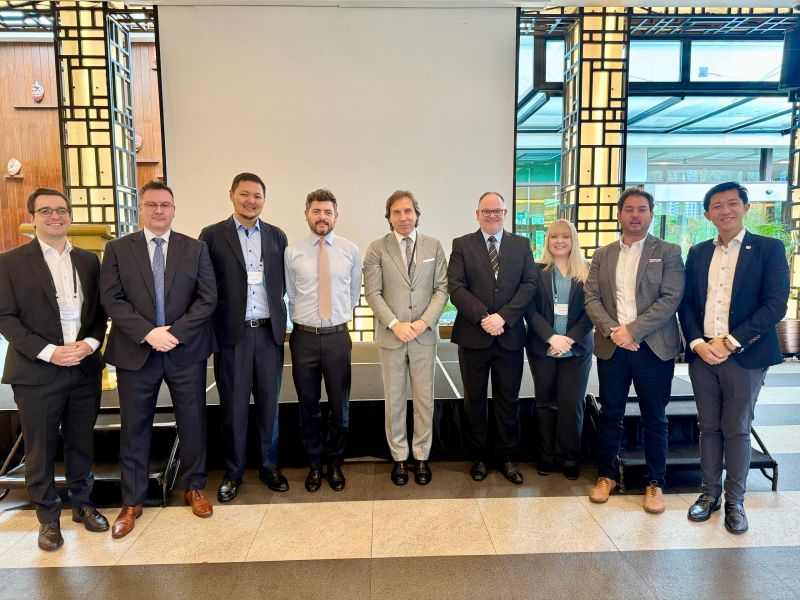
In Jakarta with the Asian Development Bank: a five-day regional workshop on TBML
Last week, in Jakarta, I had the opportunity to speak as an expert in a five-day regional workshop on TBML, jointly organised…